
If you experience these symptoms, a healthcare professional can examine your ears and determine whether wax removal is necessary.
6. Sudden or Unusual Hair Growth May Deserve Attention
Most ear hair develops gradually and is harmless.
However, if you notice sudden, unusually extensive hair growth in several areas of your body, it may be worth discussing with a healthcare professional.
Generalized excessive hair growth, known as hypertrichosis, can sometimes be associated with medications, inherited conditions, or certain medical disorders.
The important distinction is that ordinary age-related ear hair is not the same as widespread or unexplained excessive hair growth.
7. Removing Too Much Ear Hair Can Cause Problems
If you dislike the appearance of ear hair, there are ways to manage it safely.
Consider these precautions:
- Use a small electric trimmer designed for external ear hair.
- Trim only hair that is clearly visible on the outer ear.
- Avoid inserting sharp scissors or grooming tools into the ear canal.
- Do not use ordinary hair-removal creams inside the ear.
- Avoid plucking deep ear-canal hairs because this can irritate or injure sensitive skin.
If hair inside the ear canal is causing problems, an ear, nose, and throat specialist can advise on safe removal.
When Should You See a Doctor?
Ear hair alone is rarely a reason for medical concern.
However, seek professional advice if you experience persistent ear pain, discharge, bleeding, sudden hearing changes, or repeated earwax blockages.
You should also discuss sudden and unexplained excessive hair growth if it occurs alongside other unusual physical changes.
Frequently Asked Questions
Does ear hair mean you have high testosterone?
Not necessarily. Testosterone can influence hair growth, but genetics and the sensitivity of individual hair follicles also matter. Ear hair cannot be used to measure testosterone levels.
Is ear hair more common in older men?
Yes. Noticeable ear hair is particularly common among older men and is considered a normal age-related change.
Does ear hair affect hearing?
Ordinary outer-ear hair generally does not affect hearing. However, excessive hair inside the ear canal may contribute to wax blockage in some people.
Should I remove the hair inside my ears?
You do not need to remove normal ear hair. If you choose to groom it, trim only the visible outer-ear hair and avoid inserting tools into the ear canal.
Final Thoughts
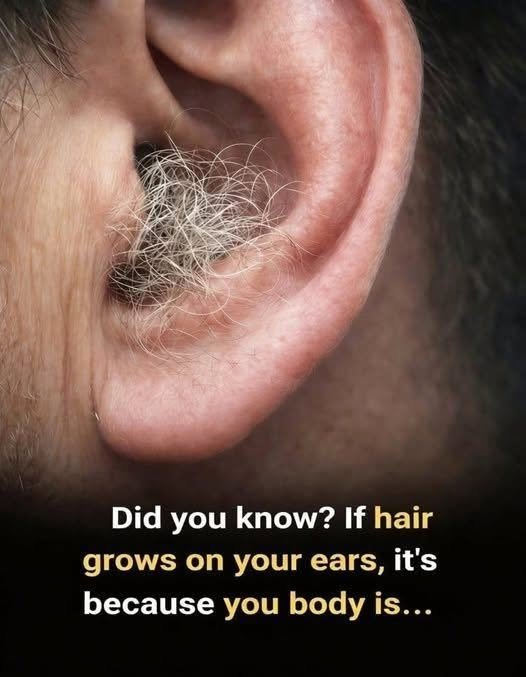
Ear hair may become more noticeable as you get older, but it usually says more about normal aging, genetics, and hair-follicle sensitivity than it does about disease.
The small hairs inside your ears also serve a protective purpose, helping keep unwanted particles away from more delicate structures.
Rather than worrying about every new hair, pay attention to actual symptoms such as pain, blocked hearing, or unusual changes.
Sometimes, what looks like an unusual change is simply another natural part of getting older.
Medical disclaimer: This article is for educational purposes only and should not replace professional medical advice or diagnosis.