
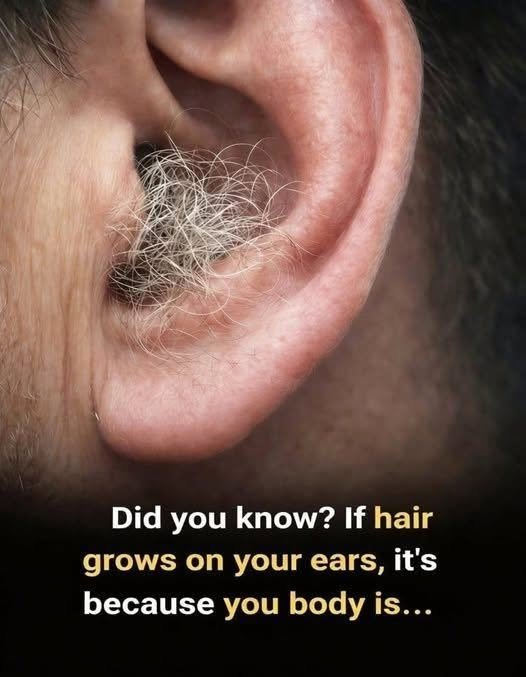
What Your Ear Hair Says About Your Health: 7 Things You Should Know
Have you ever noticed longer, thicker, or darker hairs growing around your ears? It may seem like a strange change, especially as you get older, but ear hair is actually a normal part of human biology.
For many people, noticeable ear hair becomes more common with age, particularly in men. Although it can sometimes be associated with hormonal changes, it usually does not indicate a serious health problem.
So what does ear hair really tell you about your health? Here are seven important facts worth understanding.
1. It May Be a Normal Sign of Aging
One of the most common reasons ear hair becomes more noticeable is aging.
As people grow older, some hair follicles change the way they produce hair. Fine, nearly invisible hairs may become thicker, longer, and more noticeable.
Men often experience increased growth around the ears, eyebrows, and nose as they age.
This is generally a normal biological change rather than a warning sign of disease.
2. Hormones May Influence Ear Hair Growth
Androgens, including testosterone, influence hair growth in several areas of the body.
As people age, changes in hormone levels and the sensitivity of individual hair follicles may contribute to thicker hair around the ears.
However, ear hair alone cannot tell you whether your testosterone level is high or low.
A hormone imbalance cannot be diagnosed simply by looking at someone’s ears.
3. Ear Hair Helps Protect Your Ear Canal
Not all ear hair is unnecessary.
Small hairs inside the external ear canal work alongside earwax to help trap dust, debris, and other particles before they travel deeper into the ear.
This is part of the body’s natural protective system.
The tiny sensory hair cells located much deeper inside the inner ear have a completely different function: they help convert sound vibrations into signals that the brain can interpret.
4. Genetics Can Play a Role
Some people naturally develop more noticeable body hair than others.
Genetics influence hair thickness, distribution, color, and growth patterns.
This means that if several members of your family have noticeable ear hair, you may have inherited a similar tendency.
Having hairy ears does not automatically mean that something is wrong with your hormones or overall health.
5. Excessive Ear Hair Can Sometimes Contribute to Earwax Problems
Although normal ear hair helps protect the ear canal, particularly thick hair inside the canal can sometimes make wax accumulation more troublesome.
In some individuals, excessive hair may contribute to recurrent earwax blockages.
Possible symptoms of impacted earwax include:
- A feeling of fullness in the ear.
- Reduced hearing.
- Ringing or buzzing sounds.
- Ear discomfort.
- Itching.
Pages: 1 2