
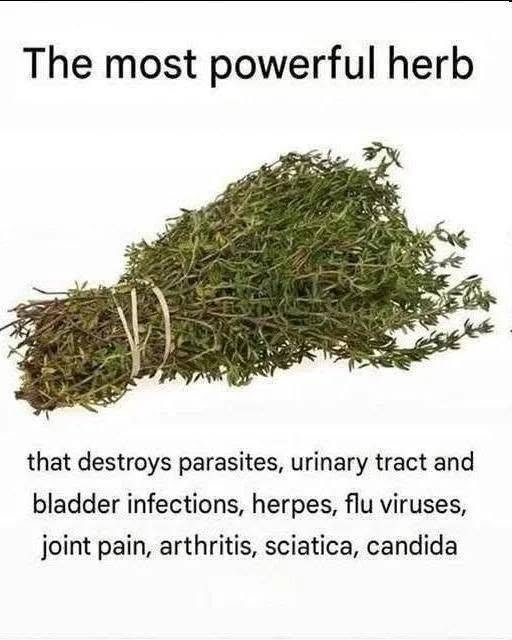
Thyme Tea
- Heat a cup of water until hot.
- Add a small amount of fresh or dried culinary thyme.
- Let it steep for several minutes.
- Strain and allow it to cool to a comfortable drinking temperature.
Thyme tea can be enjoyed as a warm beverage, but there is no established tea recipe or dosage proven to cure the infections and diseases listed in viral posts.
Cooking With Thyme
Thyme works well in soups, roasted vegetables, beans, chicken, fish, and sauces. Adding herbs to meals can enhance flavor and may help reduce the need for excess salt.
What About Thyme Essential Oil?
Essential oil is much more concentrated than the herb used in food. It should not be swallowed or applied undiluted to the skin unless a qualified healthcare professional has specifically advised an appropriate product and method of use.
People with allergies to thyme or related plants should avoid preparations that trigger a reaction. If you are pregnant, breastfeeding, taking medication, or considering concentrated herbal products, consult a healthcare professional about safety.
Frequently Asked Questions
Is thyme the most powerful medicinal herb?
There is no scientifically established ranking that makes thyme the most powerful herb. Different plants contain different compounds, and their effects depend on the condition, preparation, and available clinical evidence.
Does thyme kill bacteria?
Certain thyme compounds have demonstrated antimicrobial activity in laboratory studies. However, this does not mean that thyme reliably treats bacterial infections in the human body.
Can I drink thyme tea every day?
Thyme is generally used safely as a culinary herb. The safety of frequent medicinal use, concentrated extracts, and essential oils is less certain and depends on the product and the individual.
Can thyme replace antibiotics or antifungal medicines?
No. There is insufficient evidence that thyme can replace prescribed treatments for bacterial infections or fungal diseases. Do not stop or delay prescribed treatment in favor of herbal remedies.
Final Thoughts
Thyme is a versatile culinary herb with a long history of traditional use. Its compounds have attracted scientific interest because of their antimicrobial and other biological activities, and certain thyme preparations are traditionally used to relieve productive coughs associated with colds.
However, claims that thyme destroys parasites, cures UTIs, eliminates herpes or flu viruses, treats Candida, or resolves arthritis and sciatica go beyond the available clinical evidence.
Enjoy thyme as part of a balanced diet, but treat online claims about herbal cures with caution. When symptoms suggest an infection or a persistent medical condition, seek appropriate care rather than relying on an herb alone.