
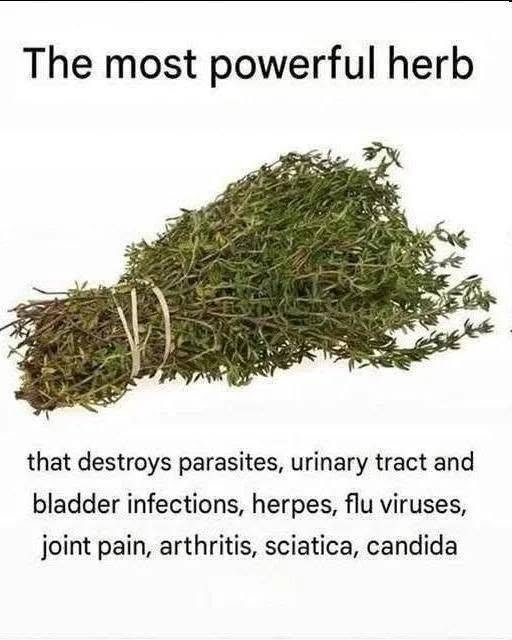
Thyme is a fragrant herb found in kitchens around the world. From seasoning roasted vegetables and soups to adding flavor to meat dishes, this small herb has played an important role in cooking for generations. It has also been used traditionally in herbal preparations, particularly for coughs and respiratory discomfort.
Online claims sometimes describe thyme as a powerful remedy that destroys parasites, cures urinary tract infections, eliminates herpes and flu viruses, and relieves arthritis and sciatica. But how much of this is supported by scientific evidence?
The answer requires an important distinction: thyme contains biologically active compounds, but that does not mean eating the herb or drinking thyme tea can cure infections or chronic diseases.
What Is Thyme?
Thyme is an aromatic herb from the Thymus genus in the mint family, Lamiaceae. Common thyme, Thymus vulgaris, is widely used in cooking and herbal preparations.
One of its best-known compounds is thymol, an ingredient that has been studied for its antimicrobial properties. Thyme also contains other plant compounds, including flavonoids and phenolic substances.
Researchers have investigated thyme extracts and essential oils in laboratory studies. However, laboratory findings do not automatically translate into effective treatments for people. The dose, preparation, method of use, and safety profile all matter.
1. Thyme and Respiratory Health
One traditional use of thyme is to help relieve coughs associated with respiratory conditions.
The European Medicines Agency recognizes certain thyme herbal medicines as traditional remedies for productive coughs associated with colds. This recognition is based primarily on long-standing use rather than strong clinical evidence proving effectiveness.
Some preparations combine thyme with other herbs, making it difficult to determine how much benefit comes from thyme itself.
Thyme tea may be a comforting warm drink when you have a mild cough, but it should not replace medical evaluation when symptoms are severe, persistent, or worsening.
2. Does Thyme Destroy Parasites?
Thyme compounds, particularly thymol and components of its essential oil, have shown activity against certain microorganisms and parasites in laboratory research.
However, there is insufficient clinical evidence to conclude that eating thyme or drinking thyme tea eliminates intestinal parasites in humans.
Parasitic infections require appropriate diagnosis and, when indicated, specific antiparasitic medication. Using thyme as a substitute for proven treatment may allow an infection to continue or worsen.