
What to Do with This Discovery
Now that you know what the object is, you have a few options for how to handle it.
Keep It as a Family Heirloom
If you enjoy cooking or appreciate history, you could clean it up and use it. It remains a perfectly functional tool for carving a leg of lamb or a ham, and using it would be a wonderful way to honor your grandmother’s memory. Displaying it in a cabinet or on a shelf is another option, allowing it to serve as a conversation piece.
Research Its Hallmarks
Take a closer look at the metal, particularly the handle and the shaft. Look for small stamped symbols, known as hallmarks. These can indicate the metal content (such as sterling silver), the maker, and the city and year of manufacture. A jeweler or an antique dealer can help you decipher these marks, which can provide more insight into the tool’s specific history and value.
Consult an Expert
If you are interested in selling it or simply want to know more, a local antique appraiser or a dealer specializing in silver and vintage kitchenware can provide an accurate assessment. They can confirm the material and give you a sense of its current market value.
Conclusion
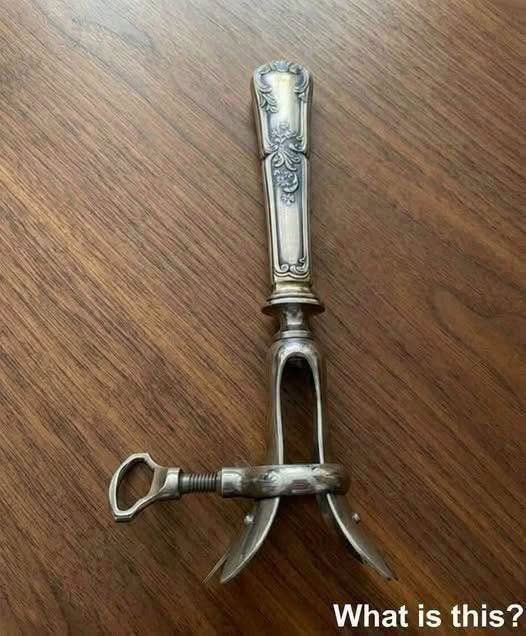
The mysterious object from your grandmother’s dresser is a leg of lamb holder, a beautiful and practical antique tool for carving large roasts. Its presence speaks to a time when dining was a more formal affair and specialized utensils were a point of pride. Rather than being a source of confusion, this discovery is a wonderful piece of history. It is a small, elegant artifact that connects you to your grandmother’s world and the traditions she held dear.
Frequently Asked Questions
What is this object called?
It is a leg of lamb holder, known in French as a manche à gigot . It is also sometimes called a lamb shank holder or a meat holder.
How old is it likely to be?
Based on its ornate, Art Nouveau-style design, it most likely dates from the late 19th or early 20th century (circa 1900) .
Is it worth any money?
It can be. Antique silver examples are collectible and can sell for hundreds of dollars, depending on the maker and condition . Even silver-plated versions have value to collectors. Its primary worth, however, is likely sentimental.
Can I still use it?
Yes, it is a functional tool. After a gentle cleaning, it can be used to hold a roast steady while carving, just as it was intended to be used.
How do I clean it?
Use a gentle silver polish if it is tarnished, and avoid abrasive cleaners that could scratch the metal. If you are unsure of the material, test a small, inconspicuous area first or consult a professional.