
The Mystery Tool in the Drawer: Identifying a Vintage Oil Can Spout and Punch
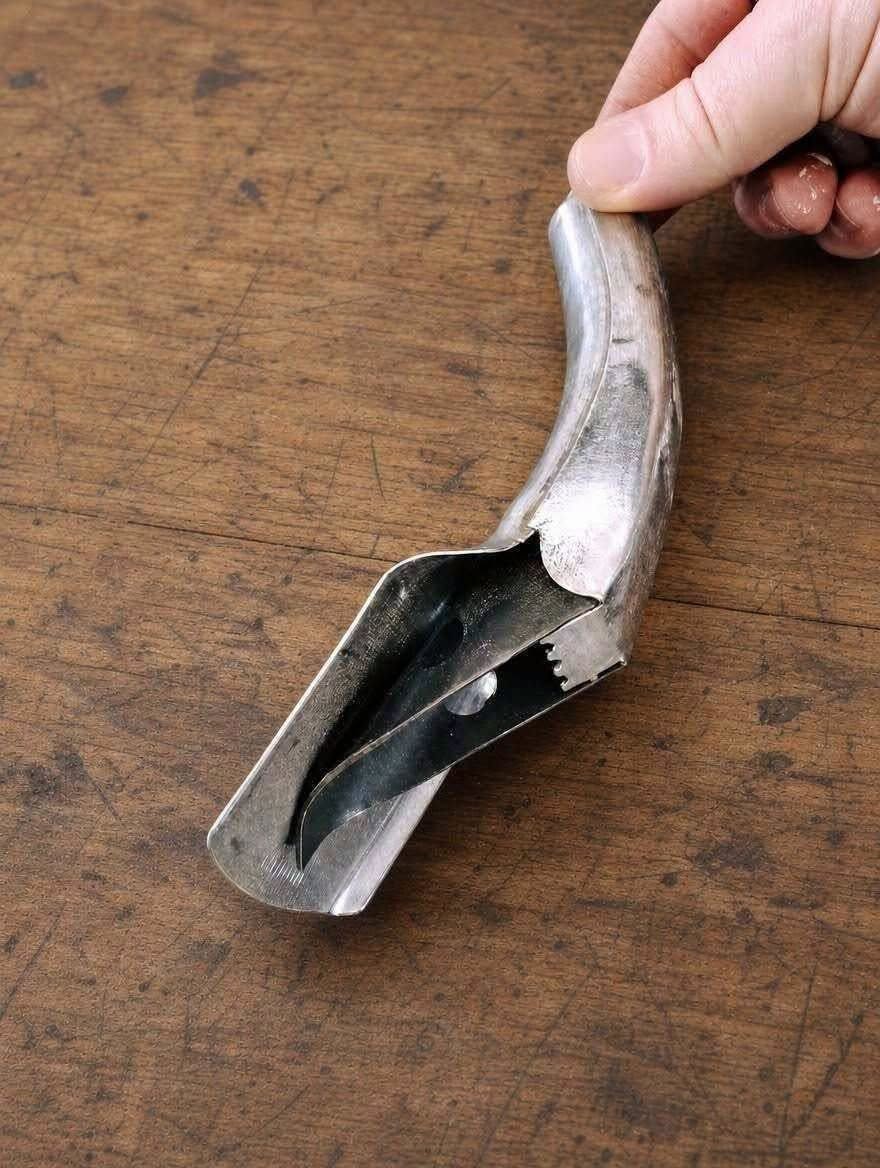
The object in the image has the kind of mystique that only a father can create. It is a solid, curved piece of metal with a hollow handle, a serrated edge, and a sharp, punch-like tip. The story of being told, “You’ll understand when you need it,” while being met with a knowing smile, is a classic generational handoff for a tool that was once as common as a screwdriver but has since faded from everyday life.
The answer to the mystery is not dangerous or exotic. It is a vintage oil can spout and punch, also commonly called an oil can opener or a “church key” for oil cans. It was designed to solve a very specific problem that existed for decades before the invention of the modern plastic bottle: how to open a sealed metal can of motor oil and pour it without spilling.
What Is the Tool and How Does It Work?
This single, cleverly designed piece of metal performs two functions that were essential for any driver or mechanic maintaining a vehicle in the mid-20th century.
The Punch: Opening the Can
The sharp, pointed tip at the end of the tool is a punch. Motor oil used to be sold in sealed metal cans, similar to a can of paint or a large tin of food. To get the oil out, you had to create an opening. The pointed end of this tool was placed against the top of the can and struck with the palm of the hand or a mallet to pierce the metal.
The Spout: Pouring Without Spilling
Once the can was punctured, the tool’s second function came into play. The hollow, curved shape of the tool acts as a spout. The wider, open end is placed into the hole that was just punched. The hollow handle then channels the oil out of the can and into the engine’s oil filler neck. The curved design helps the oil flow smoothly and directs it precisely where it needs to go, preventing the messy, wasteful spills that would occur if you simply tried to pour from a punctured can.
The serrated or toothed edge visible inside the opening of the spout is designed to grip the edge of the metal can, helping to secure the spout in place while you pour.
Why Did Dad Say “You’ll Understand When You Need It”?
The father’s cryptic smile likely comes from a place of practical, old-school wisdom. This tool represents a time when vehicle maintenance was a hands-on, do-it-yourself activity. You did not just buy a bottle of oil; you bought a can, opened it yourself, and poured it in. The tool was a rite of passage for anyone who owned a car.
The phrase “You’ll understand when you need it” could mean several things. It might be a humorous reference to the fact that the tool is only useful for a very specific, outdated task—one that the younger generation might never encounter. Or it could be a nod to the tool’s secondary, less official uses. In a pinch, a tool like this can be used to pry open a stubborn lid, punch a hole in a belt, or even serve as a crude scraper. Its sturdy metal construction makes it a handy, if unconventional, addition to a toolbox.