
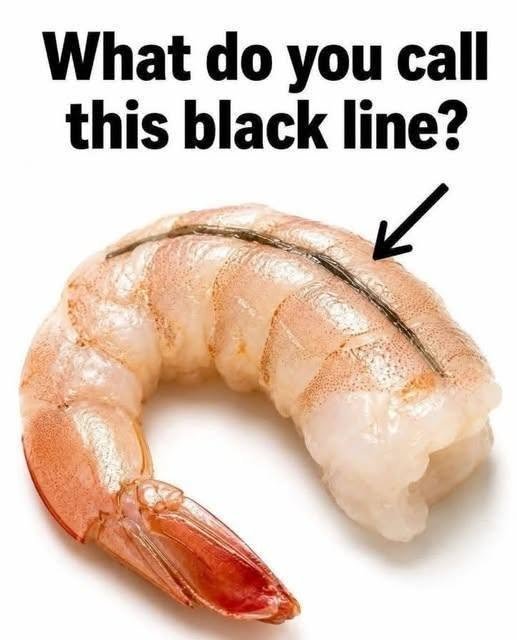
If you’ve ever prepared shrimp at home, you’ve probably noticed the dark line running along its back. Some people remove it immediately, while others cook shrimp without giving it a second thought.
But what exactly is that dark line, and should you remove it?
🦐 What Is the “Vein” in Shrimp?
Despite commonly being called a vein, the dark line along a shrimp’s back is actually its digestive tract.
It can contain digested food as well as tiny amounts of sand or grit. Although leaving it intact doesn’t necessarily make the shrimp unsafe to eat, it can sometimes affect the overall eating experience.
🍽️ Why Do People Remove It?
One of the main reasons people remove the dark line is to improve the shrimp’s texture and taste.
Depending on the shrimp and what it has consumed, its digestive tract may contain gritty material or contribute an unpleasant, muddy, or bitter taste.
Removing it also gives the shrimp a cleaner appearance and can make the final dish more enjoyable.
🔪 How to Devein Shrimp at Home
Deveining shrimp is easier than it might seem. You don’t need special equipment—just a small, sharp knife and a little patience.
1. Peel the shrimp
Remove the shell, leaving the tail on or taking it off depending on your recipe.
2. Make a shallow cut
Using a small, sharp knife, gently make a shallow cut along the back of the shrimp.
3. Locate the dark line
Look for the dark digestive tract running along the back.
4. Remove the digestive tract
Use the tip of your knife or a small utensil to gently lift the line and pull it away.
5. Rinse if necessary
If any grit remains, briefly rinse the shrimp under cold running water, then pat it dry. To reduce the risk of spreading bacteria, avoid splashing water onto nearby surfaces and utensils.