Americans have reversed the food pyramid! It may be a revolution in the menus, but there is no shortage of controversy

The new dietary guidelines announced by the U.S. have surprised many experts and could become a turning point in a global approach to a healthy lifestyle. The changes are bold and their goal is not only to improve the condition of society, but also to counteract the rising costs of health care. What is at the centre of this revolution? Check out why it is said that the traditional food pyramid has been set on its head – and what the consequences may be.
The Americans reversed the pyramid of nutrition
The U.S. administration has unveiled the latest nutrition guidelines that break with the long-standing tradition of promoting a carbohydrate-based diet.
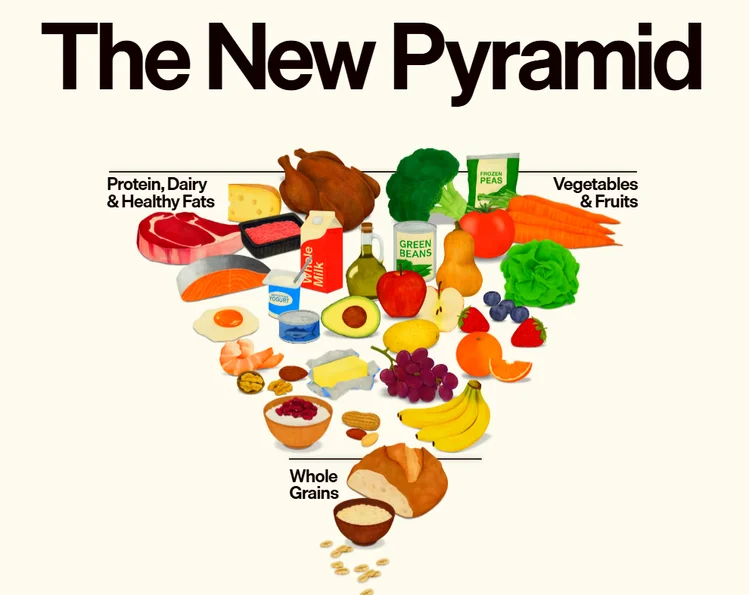
This time, however, it is not only about cosmetic changes – the so-called food pyramid has been reversed, which can have a huge impact on the health of society and global dietary trends.
"Real food" in the first place
The new document emphasizes that the basis of the daily diet should be unprocessed products, rich in natural nutrients.
Instead of focusing on the amount of calories or macronutrient proportions, the U.S. administration points out that food quality is critical to metabolic health and the prevention of chronic diseases.
Vegetables, fruits, eggs, fish, good fats and whole grain cereals – these are the pillars of a new approach. High-processing products containing added sugars, artificial additives and refined cereals are to be kept to a minimum.
Protein – the main character of the new pyramid
Unlike previous recommendations, now protein plays a key role. The new recommendation suggests an intake of 1.2–1.6 grams of protein per kilogram of body weight per day, with an emphasis on its quality and source.
In practice, this means a greater presence:
-
fish and seafood,
-
plant proteins (e.g. lentils, chickpeas, tofu),
-
lean meat and eggs,
-
while reducing the consumption of red meat and saturated fat.
Experts point out that higher protein intake supports the maintenance of muscle mass, facilitates appetite control and stabilizes blood glucose levels, which is crucial for both active people and those at risk.
Less sugar, less processed food
One of the most important goals of the new guidelines is to radically reduce the consumption of added sugar – especially the one hidden in processed foods such as beverages, ready-made dishes, breakfast cereals or candy bars.
According to current data, ultraprocessed foods are responsible for the deterioration of metabolism, increased risk of overweight and cardiovascular disease. The U.S. administration has decided that further promotion of such products is a way to nowhere.
Full-fat does not mean bad – a new approach to fat
Another turning point in the new food pyramid is the change of narrative around fats. So far, popular vegetable oils (e.g. sunflower or canola) give way to natural fats, such as:
-
extra virgin olive oil,
-
good quality butter,
-
fats of animal origin (consumed in moderation and in the context of the whole diet).
This is a definite departure from the demonization of saturated fats, although experts remind that moderation and source of origin are crucial here.
Controversy: red meat still present
Although the new guidelines focus on high quality protein, there is no lack of controversy. Red meat, butter and animal fats have been listed as acceptable sources of protein and fat, which is opposed by some nutritionists.
According to research, excessive consumption of red meat may increase the risk of digestive and metabolic problems. It also contains higher amounts of saturated fatty acids, which can affect LDL cholesterol levels.
On the other hand, experts note that the context of the whole diet is more important than a single ingredient. Eating moderate amounts of meat as part of a well-balanced diet can be acceptable – as long as it is not accompanied by excess processed food and sugar.
New food pyramid: reversed but thoughtful
The visual form of the new pyramid may surprise. Products rich in protein and healthy fats have come at the base, while refined cereals and sugar have been shifted to the very top – that is, to the zone to be avoided.
This is the symbolic end of the era of domination of bread, pasta and sweetened products as a base of everyday menu. The administration stresses that it is not about eliminating any product group, but about prioritizing.
Simple, understandable recommendations for everyone
The new guidelines are distinguished not only by the content, but also by the form of the message. Instead of an elaborate, complicated document, the administration published a short and legible summary to be understandable to the average consumer. Detailed scientific studies have been moved to the annexes, available to specialists and interested parties.
Such a procedure aims to increase the real application of recommendations – both in homes and in public institutions, such as schools, the military or social programs.
Public health instead of individual choices
One of the most important messages of the new guidelines is that nutrition is no longer just a private matter of the individual. According to the authors of the document, it is one of the most powerful health policy instruments that can affect:
-
reducing the incidence of civilization diseases,
-
improving the quality of life of society,
-
reduction of health care expenses in the long term.
What does this mean for the rest of the world?
While the guidelines have been developed with U.S. citizens in mind, their impact could be global. Dietary trends from America often set the direction also for other countries, especially in the area of nutrition education and health policy.
The new food pyramid is a signal to the world that it's time to reset your thinking about diet. The naturalness, simplicity and quality of the ingredients are back in grace – and everything indicates that they will stay with us for longer.
Comments
Post a Comment