
The Pepper Shaker Dilemma: How a Tiny Change Sparks a Big Debate About Honest Packaging
Imagine walking down the grocery-store aisle and picking up a familiar container of black pepper. It looks almost exactly as it did the last time you bought it. The shape is unchanged, the packaging is familiar, and the price may look similar.
But there is one important difference: the container holds less pepper.
This seemingly small change sparked a major dispute involving two American spice companies, McCormick and Watkins. What began as a disagreement over the contents of a pepper tin eventually became a high-profile legal battle about packaging, consumer expectations, and a practice known as shrinkflation.
The controversy raises a question that affects shoppers everywhere: When a package looks the same but contains less, are customers being given enough information to make an informed purchase?
The Pepper Tin That Started the Debate
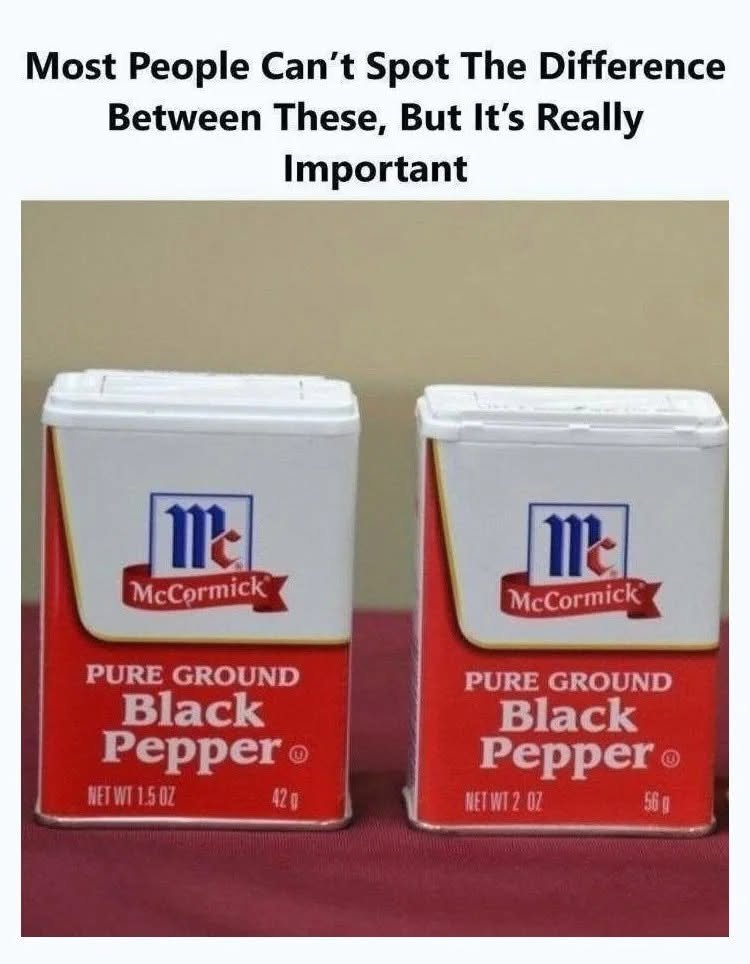
The dispute centered on McCormick’s familiar red-and-white metal tins of ground black pepper.
For decades, the company had sold different sizes containing approximately:
- 2 ounces in the small tin.
- 4 ounces in the medium tin.
- 8 ounces in the large tin.
In 2015, McCormick reduced the quantities to 1.5, 3, and 6 ounces, respectively, while keeping the external dimensions of the tins unchanged.
That represented a 25% reduction in the amount of pepper.
The company said the decision was a response to rising costs for black pepper. Keeping the familiar packaging while reducing the quantity allowed it to manage those costs without making the same kind of obvious change as a larger price increase.
However, the change attracted criticism because the metal containers were not transparent. Shoppers could not easily see how much pepper was inside.
The new quantities were printed on the labels, but critics argued that customers accustomed to the traditional tin sizes might not notice the difference.
Why Did the Smaller Quantity Cause Such a Big Reaction?
The controversy was not simply about receiving less pepper.
It was about the relationship between packaging and consumer expectations.
When people repeatedly buy the same product, they often become familiar with its appearance. They may recognize the container immediately without carefully examining every detail on the label.
That familiarity can influence purchasing decisions.
If a package retains its traditional shape and dimensions while its contents decrease, shoppers may assume they are receiving the same quantity as before.
This is why the pepper dispute became an example of shrinkflation: a company reduces the amount of a product while keeping the packaging similar, sometimes without making an equally noticeable change to the price.
Why Watkins Took McCormick to Court
The dispute became particularly interesting when Watkins, another spice manufacturer, challenged McCormick’s packaging practices.
In June 2015, Watkins filed a lawsuit alleging that McCormick’s decision to put less pepper into its traditional-sized tins created a misleading impression and harmed competition.
Watkins argued that its own packaging made the quantity of pepper more apparent, while McCormick’s familiar opaque tins could give shoppers the impression that they contained more product.
The lawsuit focused on a concept called nonfunctional slack-fill.
Slack-fill refers to the empty space between a product and the inside of its container. Some empty space is necessary for practical reasons, such as protecting products, allowing for settling, or accommodating manufacturing processes.
However, critics argue that unnecessary empty space can mislead consumers about how much product they are purchasing.
The legal dispute therefore raised questions about whether the packaging communicated the actual quantity clearly enough.
What Happened in the Legal Battle?
The case continued for several years and attracted considerable attention in the food industry.
In 2020, McCormick agreed to a $2.5 million settlement resolving related consumer class-action claims involving pepper containers. The settlement addressed allegations that consumers had been misled by the reduced quantities in familiar-sized tins. A settlement, however, is not the same as a court finding that every allegation was proven.
The separate lawsuit brought by Watkins continued.
In August 2023, a federal jury sided with McCormick, rejecting Watkins’ claims after a trial. Watkins expressed disappointment with the verdict, while the case highlighted how difficult it can be to establish that a packaging decision violates the law.
The outcome illustrates an important distinction: a packaging practice can generate legitimate consumer concerns without automatically being found legally deceptive in every lawsuit.
What Exactly Is Shrinkflation?
Shrinkflation occurs when a manufacturer reduces the quantity or size of a product while keeping its price unchanged or increasing it.
It can happen in many everyday products, including:
- Cereal boxes containing fewer grams.
- Snack bags with smaller portions.
- Chocolate bars that become lighter.
- Bottles containing less liquid.
- Household products with reduced quantities.
The packaging may remain familiar, making the change difficult to notice unless shoppers compare the labels.
For manufacturers, reducing product quantities can be one way to respond to rising ingredient, labor, transportation, or production costs.
For consumers, however, the result is a higher price per unit of product—even when the shelf price does not change.
How Can Shoppers Protect Themselves?
You do not need to become an expert in packaging to make better purchasing decisions. A few simple habits can help you spot changes.
1. Check the net weight.
Look for the weight or volume printed on the package. Do not rely only on the container’s height, width, or overall appearance.
2. Compare unit prices.
Many grocery stores display the cost per ounce, gram, liter, or kilogram on shelf labels. This makes it easier to compare products of different sizes.
3. Watch for changes in serving sizes.
A product may contain fewer servings than it used to. Comparing nutrition labels can sometimes reveal a reduction in quantity.
4. Compare competing brands.
A familiar brand is not automatically the best value. Compare the amount of product and the price before making a decision.
5. Pay attention to packaging changes.
A container that looks unchanged may still hold less than it did previously. Checking the label takes only a few seconds.
Why Honest Packaging Matters
Packaging is more than decoration. It helps consumers understand what they are buying, how much they are getting, and how products compare.
Clear labeling allows shoppers to make informed decisions, particularly when prices are rising and household budgets are under pressure.
Manufacturers also have practical reasons to redesign packaging or adjust product sizes. Rising costs, transportation efficiency, product protection, and changing consumer preferences can all influence these decisions.
The important issue is transparency. When quantities change, customers should be able to recognize the difference without having to investigate the product’s history.
The Bigger Lesson Behind the Pepper Controversy
The McCormick and Watkins dispute demonstrates how something as ordinary as a pepper tin can raise complicated questions about business practices and consumer rights.
A package may look familiar, but its contents can change. A small adjustment in quantity can affect the price customers pay for every gram of product, even if the shelf price appears unchanged.
The best protection for shoppers is to look beyond familiar packaging and compare the information that matters most: the actual quantity and the unit price.
The lesson is simple: Don’t judge a product by the size of its container. Check what is inside.
This article is for general information and does not constitute legal advice.