

The Frosted Tree Optical Illusion: Why People See Two Completely Different Things
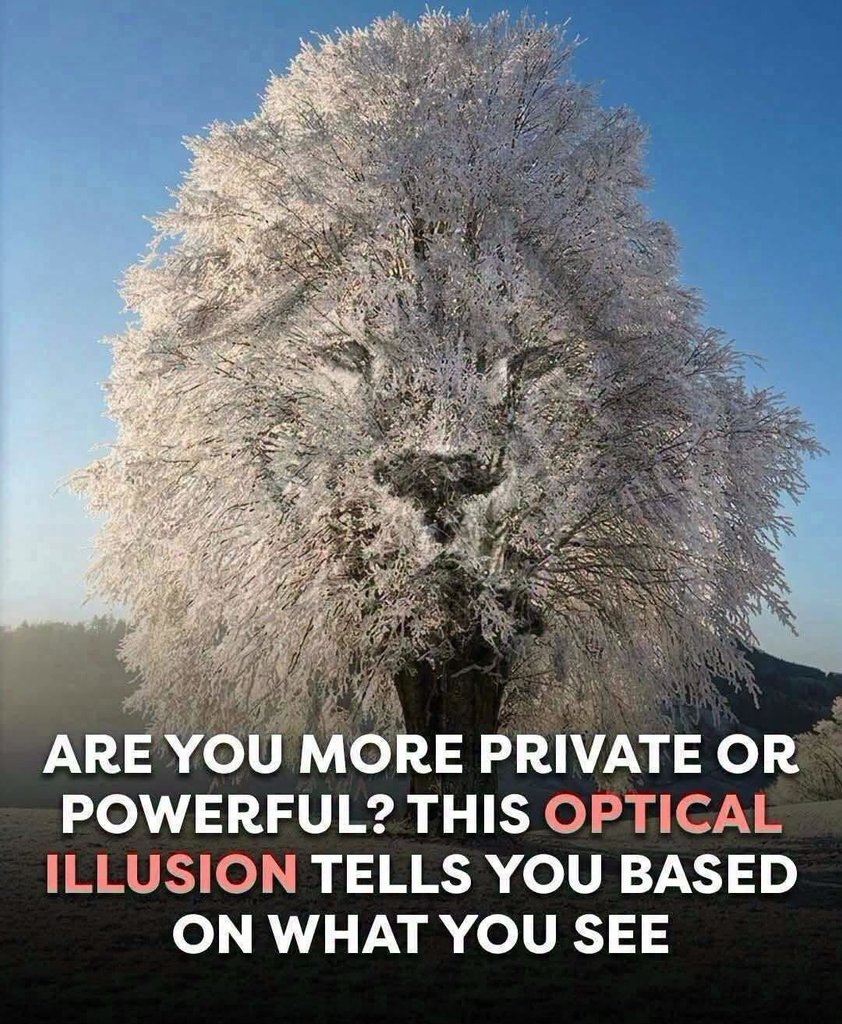
An image of a large tree covered in thick white frost has been circulating online, accompanied by a caption claiming that people see two completely different things when they look at it. The post suggests that what you see reveals whether you are “more private or powerful,” a classic personality-test framing designed to generate engagement. The image is a striking example of an optical illusion that plays on the brain’s tendency to find familiar patterns in ambiguous visual information.
The tree, with its dense, frosted branches, can be interpreted in two distinct ways. Some viewers see a majestic tree in a winter landscape. Others see something entirely different hidden within the branches. Understanding why this happens requires a look at the psychology of perception, the nature of ambiguous images, and the way our brains are wired to recognize faces.
The Two Interpretations
The image is designed to be ambiguous. The frost on the branches creates a dense, textured pattern of light and shadow that the brain can organize in different ways.
The First Interpretation: A Tree
The most straightforward interpretation is that the image is simply a tree covered in frost. The branches spread out in a natural, organic pattern, and the sky behind it is a clear, cold blue. This is the interpretation that most people see first, especially if they are not primed to look for a hidden image.
The Second Interpretation: A Face
The second interpretation, and the one that the viral post is hinting at, is a face. The branches form the shape of eyes, a nose, and a mouth. The dark gaps between the frosted branches create the shadows of the facial features, while the lighter areas form the highlights. This is a classic example of pareidolia, the human tendency to see faces in random patterns.
The Psychology Behind the Illusion
The reason this image works is rooted in the way the human brain processes visual information. Our brains are highly attuned to recognizing faces, as this ability is essential for social interaction and survival.
Pareidolia: Seeing Faces in Patterns
Pareidolia is a psychological phenomenon that causes people to perceive a specific, often meaningful image in a random or ambiguous visual pattern. Seeing faces in clouds, in the arrangement of leaves, or in the texture of a frosted tree is a common example of this. The brain’s facial recognition system is so sensitive that it can be triggered by minimal cues—a few dark spots for eyes and a line for a mouth are often enough to create the perception of a face.
The Role of Context and Priming
The viral caption primes the viewer to look for a hidden image. By telling people that “people are seeing two completely different things,” it encourages them to look more closely and to search for an alternative interpretation. This is a form of priming, where the context or framing of an image influences how it is perceived. Someone who is told there is a face in the image is much more likely to see one than someone who is simply shown the picture without any context.